Timing matters most
Grass seed germinates best when the soil is warm and moist. Late summer to early autumn and mid spring are usually the best windows in Norfolk.

Grow a lawn from seed
Turf Norwich prepares seed beds and sows new lawns across Norwich and Norfolk, and overseeds thin, patchy lawns to thicken them up.
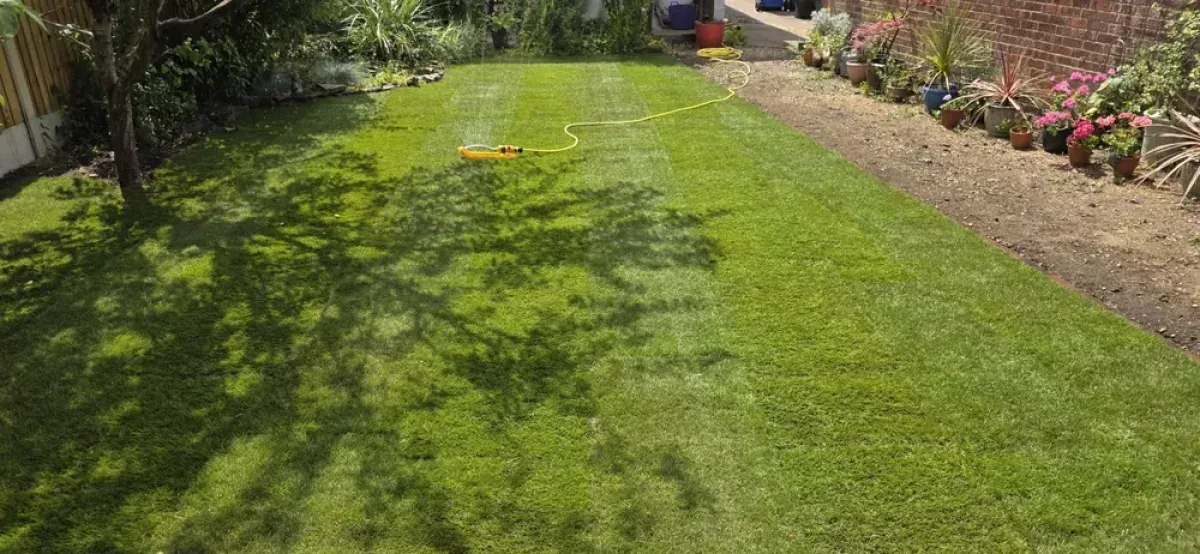
Turf is not the only way to a good lawn. Sowing seed takes longer to give a finished look, but it has real advantages in the right garden. It costs less in materials over a large area, it lets you choose a seed mix for shade, heavy wear or a fine finish, and it suits awkward spaces where turf is hard to get to. Overseeding an existing lawn is also the gentlest way to thicken up grass that has gone thin.
We sow new lawns on prepared ground and overseed tired lawns for homeowners who are happy to wait a little longer for the result. A sown lawn succeeds or fails on its seed bed, so we spend the time getting the soil fine, level and firm before any seed goes down.
For a new sown lawn or overseeding, the work usually covers:
Grass seed germinates best when the soil is warm and moist. Late summer to early autumn and mid spring are usually the best windows in Norfolk.
A seed bed must stay damp until the grass is established. Plan for gentle, regular watering, especially in a dry spell.
Birds enjoy grass seed and dogs enjoy soft soil. Netting, string lines or keeping pets away for a while protects the new lawn.
A sown lawn needs longer than turf before it can take play and traffic. Think about when you will need the garden.
Hard wearing mixes suit family lawns, shade mixes cope better under trees, and fine mixes give an ornamental finish. The right mix makes a big difference.
Weed seeds in the soil will sprout alongside the grass. Most disappear once regular mowing starts.
Uneven watering, birds or heavy rain can leave thin patches. A light resow in those spots usually sorts it.
Wait until the new grass is a few inches tall, then cut with sharp blades set high, taking only the tips.
We visit, check the soil, sun and shade, and talk through whether seed or turf suits the garden best.
The ground is cleared, cultivated, topped up where needed, levelled, firmed and raked fine.
The chosen seed mix is spread evenly and raked in lightly so it is in contact with the soil.
You get clear guidance on watering, protecting the seed and when to mow for the first time.
FAQs
Something else on your mind? Ask us when you request your quote, or call 01603 265243.
Grass seed usually starts to show within a couple of weeks in warm, moist conditions, but a seeded lawn takes a good few months to thicken into a hard wearing sward.
Seed costs less in materials, especially over large areas. The preparation is similar, so the saving is mostly in the turf itself.
Yes. Scarifying and overseeding is a good way to thicken a thin lawn without starting again.
Shade tolerant mixes contain grasses that cope with less light. Even so, grass under dense trees will always be thinner than in full sun.
It is possible, but hot, dry weather makes it hard to keep the seed bed moist. Late summer into early autumn is usually more reliable.
In dry weather, yes. The surface should stay damp until the seedlings are established, so light, regular watering is best.
Out with the tired lawn, in with fresh turf on properly prepared ground.
New lawns laid on new builds, cleared plots and reshaped gardens.
Bumps, dips and slopes taken out so the lawn mows and drains evenly.
A green lawn with no mowing, laid on a firm, free draining base.
Tell us about your garden and we will come and look, measure up and give you a free quote. No subcontracting: the team that quotes is the team that lays.